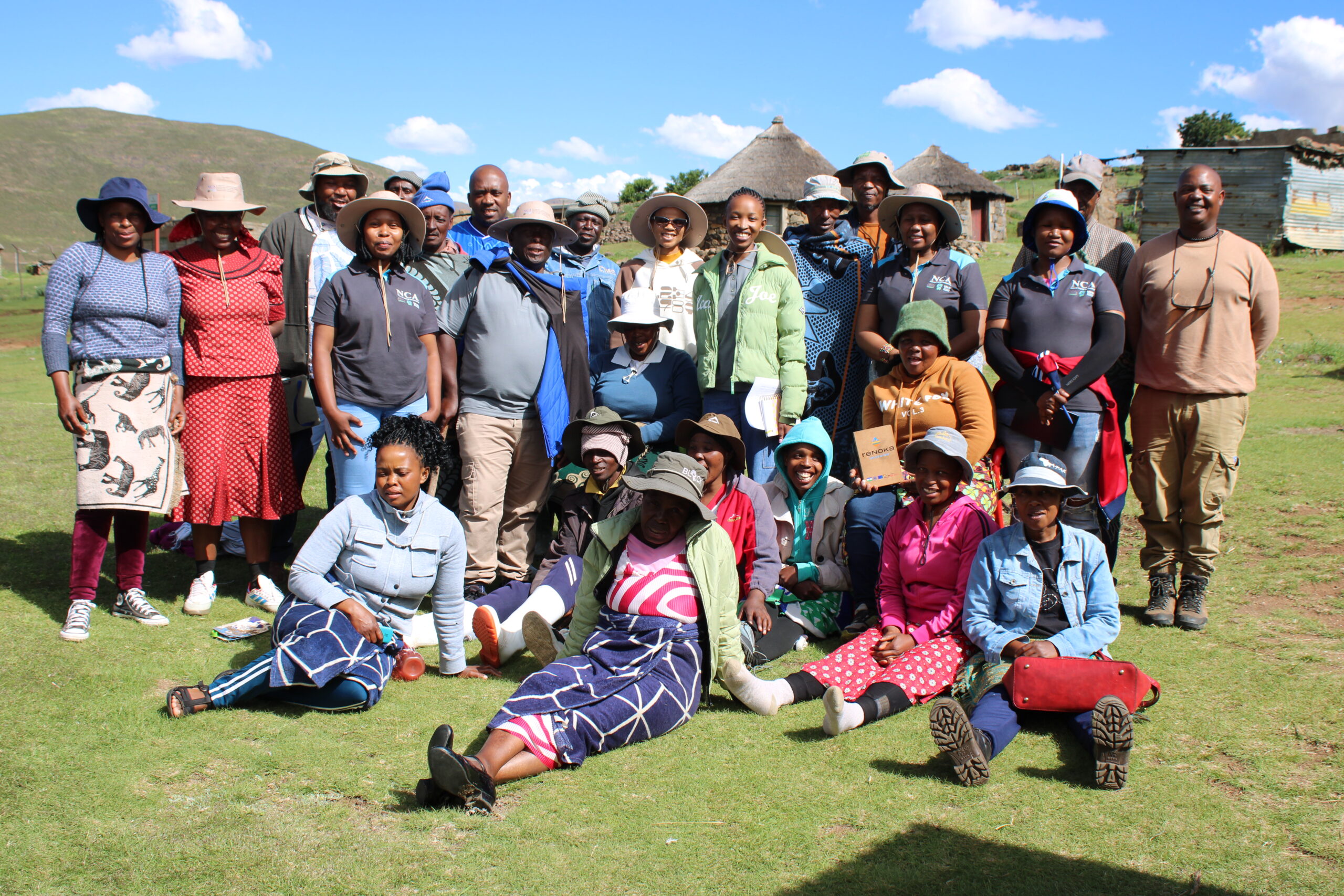
The Ministry of Environment and Forestry (MEF) in partnership with UNDP is implementing a national project, titled: “Promoting conservation, sustainable utilization and fair and equitable benefit-sharing from Lesotho’s Medicinal Plants for improved livelihoods”, funded through Global Environment Facility (GEF). The project aims to strengthen national and local institutional capacities, establish legal frameworks, for the implementation of the Nagoya Protocol on Access and Benefit-Sharing (ABS) with a focus on traditional knowledge on medicinal plants in Lesotho and the potential for bioprospecting. The project is implemented in protected areas and other hotspot areas for medicinal plants and in the country, where activities that promote conservation of the plant resources and deliver benefits to local communities in the project areas will be supported.
The project sites include the core protected areas:
- Sehlabathebe National Park
- Tšehlanyane National Park
- Bokong Nature Reserve
- Letša-la-Letsie Ramsar site
- As well as their buffer and transitional zones in surrounding landscapes, including other hotspot areas for medicinal plants across the country.
Project Objectives
To strengthen national and local capacities to implement the Nagoya Protocol on Access and Benefit Sharing (ABS) with a focus on traditional knowledge on medicinal plants in Lesotho and the potential for bioprospecting.
To achieve this, the project seeks to support the creation of an enabling environment and equip all stakeholders (users, providers, policy makers, researchers, law enforcement officers, and the wider Basotho nation) with the skills, capacity, and resources to sustainably harvest, add value to, manage, conserve, and benefit from genetic resources.
Project Components & Outcomes
Component 2: Building Capacities for bioprosepcting and value-addition of genetic resources
Outcome 2.1
Opportunities for bioprospecting strengthened with improved research capabilities to add value to genetic resources.
[Number of people trained to promoted bioprospecting: 200]
Outcome 2.2
Enhanced capacity of key stakeholders including women to participate in ABS and bioprospecting processes.
[Number of research collaboration agreements established between users [researchers and academia] and providers [LCs] of genetic resources with considerations for gender equity: at least two]
[Number of key/local stakeholders trained: 1,000]
Component 4: Monitoring and Evaluation [Support the M&E of project implementationl outcomes, and outputs to ensure that the project achieves its goals and objectives
Outcome 4.1
- Participatory M&E results are used to guide adaptive management, collate and share lessons, in support of up-scaling.
- M&E conducted following GEF & UNDP Guidelines.
[Quality rating of project reports (PIR, MTR and TE) as per UNDP/GEF requirements: Satisfactory]
Monitoring of Indications in the project results framework.
NAGOYA Protocol
An international agreement dedicated to genetic resources and the fair and equitable sharing of benefits arising from their use
A supplementary agreement to the Convention on Biological Diversity (CBD)
Objective – to regulate ABS
Emphasizes the importance of associated traditional knowledge (ATK)It supports the fair and equitable sharing of benefits arising from the use of genetic resources and Tca (Traditional Knowledge associated with genetic resources)
It requires Parties to establish a legal framework on ABS.
What is ABS?
Access: How genetic resources can be accessed
Benefit Sharing: How benefits arising from the use of genetic resources can be shared between the people or countries using the resources (the “users”) and the people or countries making them available (the “providers”)
*Users are interested in access to genetic resources; and
*Providers are interested in benefit-sharing
Key elements of the NAGOYA protocol
Access: Access to genetic resources requires Prior Informed Consent (PIC) from the provider country and must be based on Mutually Agreed Terms (MAT), with clear national procedures to facilitate fair access.
Benefit-Sharing: Benefits—monetary or non-monetary—arising from the use of genetic resources or their derivatives must be shared fairly and equitably with the provider country or community, as agreed in the MAT.
Compliance: Parties must ensure users comply with ABS rules through national measures, checkpoints, and information systems that track the use of genetic resources and verify compliance with PIC and MAT. (Ensuring that only legally acquired genetic resources are used)
Traditional Knowledge: Access to traditional knowledge associated with genetic resources requires PIC and MAT from Indigenous and Local Communities (ILCs), respecting their customary laws and ensuring equitable benefit-sharing.
Guidelines and procedures for obtaining Prior Informed Consent (PIC) and Mutually Agreed Terms (MAT) will be developed.
Why is the implementation of the Nagoya Protocol important?
Role of the Nagoya Protocol:
- It guarantees legal certainty through clear procedures for access and benefit-sharing (ABS).
- It promotes fair exchange between businesses, governments, researchers, and indigenous communities.
- It links bioprospecting, R&D, and product development to benefit sharing.
- Generates monetary and non-monetary benefits for biodiversity conservation and rural livelihoods.
- Promotes biodiversity conservation.
- Improves the well-being of rural populations.
- Creates sustainable scenarios where everyone wins for all stakeholders.
Key Sectors
- The pharmaceutical, cosmetics, biotechnology, agricultural, and horticultural industries rely on genetic resources for products such as medicines, skin care, and improved crops
Key issues for Lesotho:
- Economic: the lack of control over the use of genetic resources and the benefits they generate results in a considerable loss of income for the country and the providers of the resources.
- Social: Rural populations face growing poverty, migration to urban areas, and a lack of local economic development.
- Environmental: most of the country's ecosystems are under threat (climate, drought, pollution, overexploitation, etc.), mainly due to a lack of appreciation and adequate resources to ensure their preservation
Institutional Arrangements
Project Governance Mechanism
Sub-Committee
Bioprospecting
Sub-Committee
Management
Sub-Committee